


A level Philosophy Ethics & Religion
Masterclass 2025 | 2026
2025 | 2026
UK
Welcome
This study day is designed to enrich your students’ understanding, spark intellectual curiosity, and equip them with the tools to excel in A Level Philosophy, Ethics and Religion.
Led by some of the UK’s most distinguished academics—including speakers from Oxford and Cambridge—this event offers your students the chance to engage with complex ideas in a clear, accessible, and challenging format. Held in prestigious venues in London, Oxford, and Cambridge, the day features university-style lectures tailored to meet the needs of A Level learners across all major specifications (AQA, OCR, Edexcel, and Eduqas).
More than just a day out, this is a carefully structured academic experience that complements classroom learning, promotes independent thinking, and has the potential to significantly raise attainment.
Teachers consistently report that students return from these events more motivated, more confident, and better prepared for the demands of A Level study—and beyond.

Follow us on
The Professors: What to Expect on the Day
- Delegates receive an individual copy of bespoke structured notes and resources to support classroom and exam preparation
- University-style lectures from leading scholars with exceptional communication skills
- Curriculum-aligned content across ethics, philosophy of religion, and theology
- Opportunities to debate, question, and develop independent thinking
- Inspiration for deeper, self-directed learning beyond the textbook
These events are designed to complement your teaching, reinforce key areas of the syllabus, and spark fresh enthusiasm for the subject. Students return to the classroom more confident, intellectually engaged, and better prepared for exam success.
Whether your learners are aiming for top grades, considering further study, or simply benefit from hearing complex ideas explained with clarity and insight, this is a day that will stretch their thinking and raise their aspirations.
The Professors: Study Day Content
Introduction and welcome
9:50 (London 10:20)

Euthanasia
Julie Arliss
10:00 – 10:50 (London 10:30 – 11:20)
Euthanasia raises some of the most pressing questions in modern ethics. This session introduces students to the key concepts of sanctity of life and quality of life, exploring their religious roots — that human beings are made in the image of God — and their secular counterparts, which argue that value depends on attributes such as rationality or consciousness. Students will examine voluntary euthanasia, where life is ended at a patient’s request, and non-voluntary euthanasia, where decisions are made on behalf of those unable to consent, such as in cases of persistent vegetative state. Learners will also consider how Natural Law and Situation Ethics apply, and whether the idea of sanctity of life still has meaning in twenty-first-century medical ethics. Is there a moral difference between actively ending life and allowing death by non-intervention? Do individuals have complete autonomy over decisions about their own lives? Scholarly perspectives and sources of wisdom will frame discussion, encouraging students to engage critically with one of the most challenging issues in applied ethics.

God Science and Suffering: Is Faith Still Rational?
Professor Alister McGrath (Oxford), Dr Ralph Weir (London) Professor James Orr (Cambridge)
10:50 – 11:40 (London 11:20 – 12:10)
This session offers a compelling exploration of some of the most significant challenges to religious belief in the modern world. Students will be encouraged to think critically about whether belief in God remains intellectually credible in the face of suffering, injustice, and natural disasters. We will also consider whether developments in cosmology, biology, and neuroscience have displaced the need for religious explanations altogether.
While drawing on classic arguments from Natural Theology, the session will place fresh emphasis on their relevance — or irrelevance — within today’s scientific and philosophical landscape.
Designed to stretch and inspire A Level students, this talk will develop their evaluative and analytical skills and invite them to engage deeply with key debates at the heart of the Philosophy of Religion specification.
Break
11:40 - 12:00 (London 12:10-12:30)

Religious Experience
Professor Liam Gearon
12:00 – 12:50 (London 12:30 – 13:20)
An unforgettable A Level Religious Studies Enrichment Talk with Professor Liam Gearon from the University of Oxford. In this inspiring session on Religious Experience, students will grapple with visions, mystical encounters, and Otto’s idea of the numinous, before testing the challenges of science and philosophy against faith. From Swinburne’s principles of credulity and testimony to Hume on miracles and Wittgenstein on religious language, Professor Gearon will lead students through the key debates that shape the specification—while sparking fresh curiosity and critical thinking. Perfect for deepening subject knowledge, sharpening exam skills, and giving your students a taste of university-level discussion.

THE BIG DEBATE: Sexual Ethics: Is Consent Enough?
12:50 – 13:30 (London 15:30 – 15:45)
Is consent the whole story? Ethical theories don’t hand us ready-made answers, but they do give us methods for thinking these issues through. This interactive debate invites students to contribute their own ideas, test the tools of ethical reasoning, and decide together whether consent really settles the question.
Lunch
13:30 – 14:15 (London 13:20 – 14:10)

On Autonomy and Heteronomy: Feminism and Christianity
Professor Daphne Hampson
14:15 – 15:05 (London 14:10 – 15:00)
Central to feminism has been the concept of autonomy, that one is true to oneself and does not bow to (usually male) authority. Feminists speak of inter-relationality between those who are ‘centred’ selves. They want to demolish hierarchical relationships that involve heteronomy (allowing the other be the law to one/ doing what they say). Now Christianity may well be said to be inherently heteronomous. Christians believe in a transcendent God who is other than the self and (if God is to be God) both all-powerful and to be obeyed. Further they believe in a particular revelation (one of its kind) in history which, given its uniqueness and thus interruptive nature, means that reference must constantly be made to it as in some sense authoritative. In the case of Catholicism moreover, the Church is a source of authority. For one who believes in human autonomy this must create a dilemma. It may be that the only way to possess a spirituality that is easily at one with the need to be oneself is to abandon Christian belief and to think about that which is God in a different way.
Speakers

Professor James Orr
Professor James Orr left corporate law ten years ago to become a student again and has recently secured a lectureship at Cambridge University. Formerly McDonald Postdoctoral Fellow at Christ Church, Oxford, Professor Orr holds a PhD and MPhil from St. John’s College, Cambridge, and a Double First in Literae Humaniores from Balliol College, Oxford. His publications and policy papers cover many fields including ‘The Discarded Mind’ ‘Created Equal’ and ‘Being and Eternity’. An impressive polymathic mind keen to inspire curious young minds in the search for knowledge.

Julie Arliss
Julie Arliss is a well-known experienced teacher and author. She works closely with exam boards and is perfectly placed to support students in preparation for A level examinations. She is an experienced examiner. Julie has an international reputation for inspiring academic excellence and encouraging students to push the boundaries of knowledge
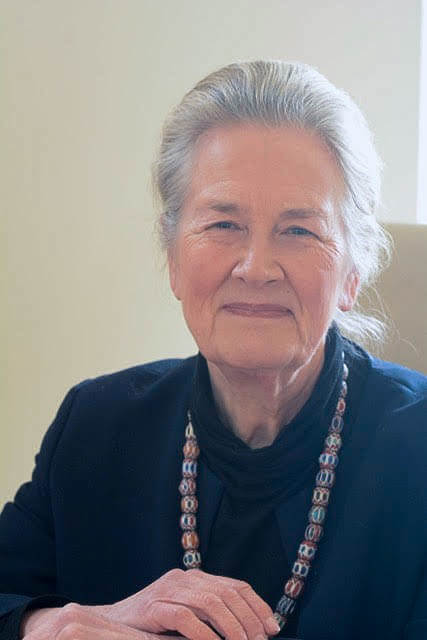
Professor Daphne Hampson
Daphne Hampson is a systematic theologian, professor emerita of the University of St Andrews where she held a chair in Post-Christian Thought and in her retirement an Associate of the Department of Theology and Religion at the University of Oxford. Writing on the challenge of feminism to Christianity, she is the author of Theology and Feminism (1990), After Christianity (1996, 2002), and the editor of Swallowing a Fishbone? A new book is entitled Religion as Gender Politics. Otherwise she has specialised in the Lutheran tradition and is the author of Christian Contradictions: The Structures of Lutheran and Catholic Thought (2001) and Kierkegaard: Exposition & Critique (2013).
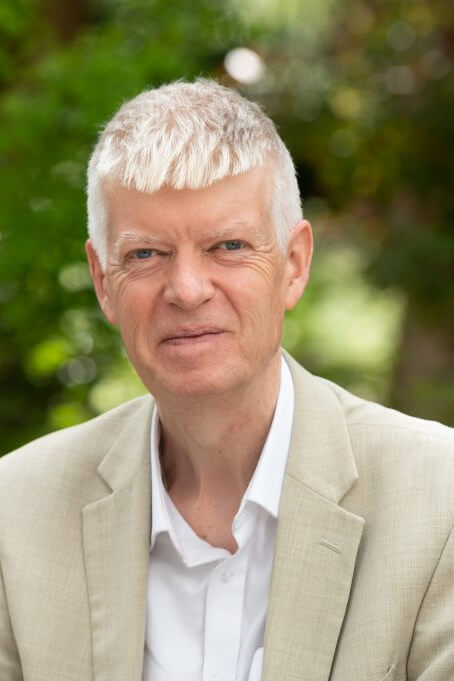
Professor Liam Francis Gearon
Professor Liam Gearon (PhD, FHEA, FRSA, Docent) is a world-leading scholar at the University of Oxford, where he is Associate Professor in the Department of Education and Senior Research Fellow at Harris Manchester College. He also holds Professorial and Visiting appointments internationally, including in Finland, Australia, Ireland, and South Africa.
Author or editor of more than thirty academic books and nearly one hundred articles, he is co-editor of The Oxford Handbook of Religion and Education (Oxford University Press, 2025). His research has shaped school curricula, teacher training, and policy worldwide.
Professor Gearon is also an outstanding and inspiring speaker, renowned for bringing complex ideas to life with clarity and passion. His work with teachers, schools, and students has had lasting impact, making him one of the most engaging voices in contemporary education.

Professor Alister McGrath
Professor Alister McGrath holds three doctorates from the University of Oxford; a doctoral degree in molecular biophysics, A Doctor of Divinity degree in theology and a Doctor of Letters degree in intellectual history.
He is best known for his work examining the relationship between science and religion, and, as a former atheist, his opposition to New Atheism and antireligion. Among his best known books are The Dawkins Delusion? Dawkins’ God: Genes, Memes and the Meaning of Life. He is the former principal of Wycliffe Hall and most recently held the Andreas Idreos Professorship of Science and Religion at Oxford. He is currently developing a series of accessible video presentations which are available free of charge on his website.
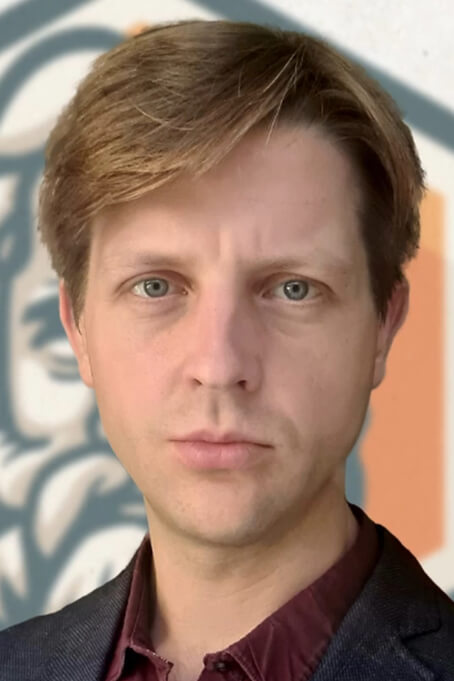
Dr Ralph Weir
Dr Ralph Weir is Lecturer in Philosophy at the University of Lincoln and Associate Member of the Faculty of Theology and Religion at the University of Oxford. He is the author of The Mind-Body Problem and Metaphysics (Routledge, 2023) and has published widely on consciousness, metaphysics, and the philosophy of mind.
As a founding organiser of the Humane Philosophy Project, Ralph has been at the forefront of international dialogue on the relationship between science, philosophy, and religion. His work explores how metaphysical perspectives shape our understanding of consciousness, reality, and the place of science within broader human knowledge.
A dynamic and engaging speaker, Ralph brings fresh insight into the dialogue between science and religion, making complex ideas accessible and inspiring for teachers and students alike.
Venues
Bookings and Admin
Bookings
These events fill quickly but we appreciate that some schools need time to organise their students. We are keen to help if you need more time.
If your group is smaller than 5 please get in touch and we can help you with your booking
Bookings are made on behalf of pupils by their teacher. If you are studying the online EthIQa A level or do not have a teacher please make contact and we will be happy to advise.
Arrival and Registration
Oxford and Cambridge arrival from 9:30. The programme begins promptly at 9:50 and concludes at 15:15.
London arrival from 9:30. The programme begins promptly at 10:30 and concludes at 16:00
Study Day Fees
Student £38.50 (£35 for early bird online ticket sales before 7 October T&C apply)
Staff £38.50 1 free place with every 12 students (£35 for early bird online ticket sales before 7 October T&C apply)
Unaccompanied teachers attending for professional development £220.
Please bring your own refreshments
CPD Bookings
Testimonials
What Students Say
What Teachers Say
Endorsed by

Proud to work with


